 Save to Pinterest
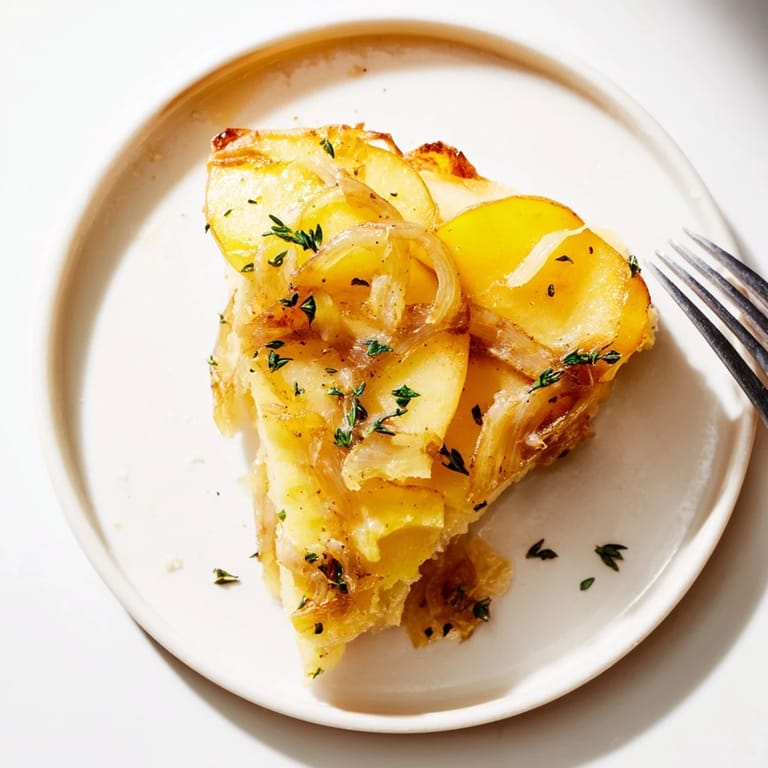
 There's a moment in late autumn when the kitchen fills with that unmistakable caramel-onion sweetness that makes everything else fade away. I was standing at the stove, stirring down a batch of onions for soup, when I realized I had enough roasted potatoes from dinner prep to layer beneath the bubbling cheese instead. That accident turned into something better than the soup itself—golden potato slices soaking up all that deep, savory umami, crowned with melted Gruyère that stretched in golden threads. Now this is what I make when I want all the soul of French onion soup but with something you can actually use your fork on.
I made this for my brother's birthday dinner last winter, and he actually asked for seconds before he'd even finished his steak. My mom kept reaching across the table for one more forkful, completely forgetting her own plate. That's when I knew this recipe had crossed over from happy accident to something I'd be making again and again.
Ingredients
- Yukon Gold or russet potatoes (1.5 kg / 3.3 lbs), sliced 1 cm thick: Yukon Golds stay creamy and hold their shape beautifully, but russets get more tender and absorb the onion flavor even better; slice them on a mandoline if your knife skills are rusty, and don't stress about perfect thickness.
- Unsalted butter (2 tbsp): This is what makes your onions turn into liquid gold; salted butter will make the whole dish too salty, so don't skip this detail.
- Olive oil (3 tbsp total): Use it to roast the potatoes golden and to help the onions caramelize without sticking; cheap oil is fine here since it's cooking down.
- Kosher salt (1 tsp total): It dissolves into the onions slowly, drawing out their moisture and concentrating their sweetness.
- Fresh thyme (1 tsp fresh leaves or ½ tsp dried): This single herb is what bridges the gap between potato and French onion soup; dried works just fine if fresh isn't on hand.
- Balsamic vinegar (1 tsp): A small splash at the end adds a subtle sweetness and complexity that makes people ask what the secret ingredient is.
- Gruyère cheese (200 g / 7 oz), grated: Its nutty, slightly sharp character melts smoothly and doesn't turn greasy; this is worth splurging on rather than grabbing pre-shredded.
- Parmesan cheese (30 g / 1 oz, optional): Adds a salty bite if you want extra depth, but the dish is perfect without it.
- Fresh parsley (2 tbsp, chopped): A bright finish that cuts through the richness and makes it look like you actually care.
Tired of Takeout? 🥡
Get 10 meals you can make faster than delivery arrives. Seriously.
One email. No spam. Unsubscribe anytime.
Instructions
- Get your potatoes golden and tender:
- Toss your sliced potatoes with olive oil, salt, and pepper until they're well coated, then spread them in a single layer on parchment paper. Roast at 220°C (425°F) for 25–30 minutes, giving them a flip halfway through so both sides turn golden and crispy at the edges; you want them cooked through but not falling apart.
- Coax the onions into caramel magic:
- While potatoes roast, melt butter with oil in a large skillet over medium-low heat and add your thinly sliced onions with a pinch of salt. This takes patience—stir them every few minutes for 25–30 minutes until they're deep golden and smell sweet rather than sharp; near the end, add thyme and balsamic vinegar for one more minute, then taste and adjust seasoning.
- Layer and top with cheese:
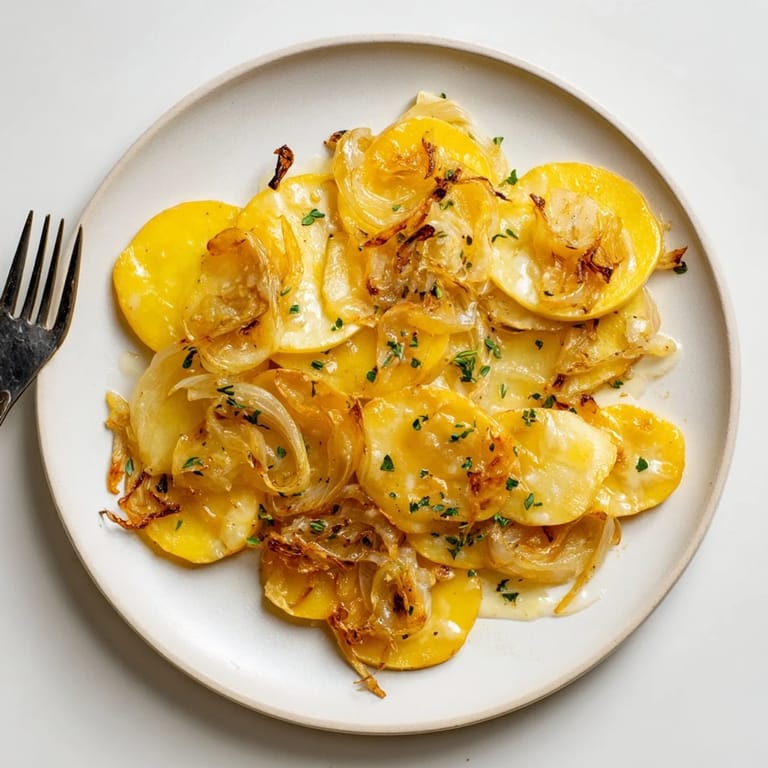
- Drop your roasted potatoes into a lightly oiled baking dish, layering them slightly overlapped, then spoon those caramelized onions over the top in an even blanket. Cover generously with grated Gruyère (and Parmesan if you're using it) so every potato slice gets some melted cheese.
- Finish in the oven:
- Lower the oven to 200°C (400°F) and bake for 10–15 minutes until the cheese is bubbling at the edges and the top is golden; you want it hot through and through but not dried out. Let it cool for a minute, scatter parsley over the top, and serve while the cheese is still flowing.
 Save to Pinterest
 My sister-in-law, who's usually skeptical of anything labeled a side dish, went completely quiet when she tasted this. That kind of silence in a room full of people passing food around is worth more than any compliment—it meant the dish was speaking for itself, and everyone was just trying to taste it again.
Why Caramelization Changes Everything
The secret to this whole recipe isn't in any exotic ingredient—it's understanding that onions have their own natural sugars just waiting to be coaxed out with gentle heat and time. When you rush them, you get sulfur and bite. When you give them space, they transform into something sweet and deep that makes people lean in closer to their plates. This is true for almost any caramelized onion situation, but it matters especially here because these slow-cooked onions sit directly on your potatoes, and their sweetness is the whole reason you're not just making a baked potato.
Cheese Choice Matters More Than You'd Think
Gruyère has this subtle nuttiness that plays so well against the sweetness of the onions, and it melts into this silky, cohesive layer without ever turning greasy or separating. If you can't find Gruyère, Swiss cheese works in a pinch, but those pre-shredded bags with anti-caking powder can turn gritty under heat. Always grate your cheese fresh if you have time—the texture difference is noticeable and worth the extra two minutes.
Beyond the Side Dish
Most people think of this as something to serve alongside steak or roast chicken, and it absolutely shines in that role, but it's genuinely substantial enough to be a vegetarian main course with a sharp green salad on the side.
- A splash of dry white wine stirred into the onions in the last few minutes adds a subtle sophistication that guests will taste but not be able to name.
- If you're making this ahead, assemble everything except the cheese, cover it, and refrigerate; just add an extra 5 minutes to the final bake time if it's cold.
- Leftovers rewarm beautifully in a 180°C oven covered loosely with foil, and honestly, cold the next day straight from the fridge, it's its own kind of perfect.
 Save to Pinterest
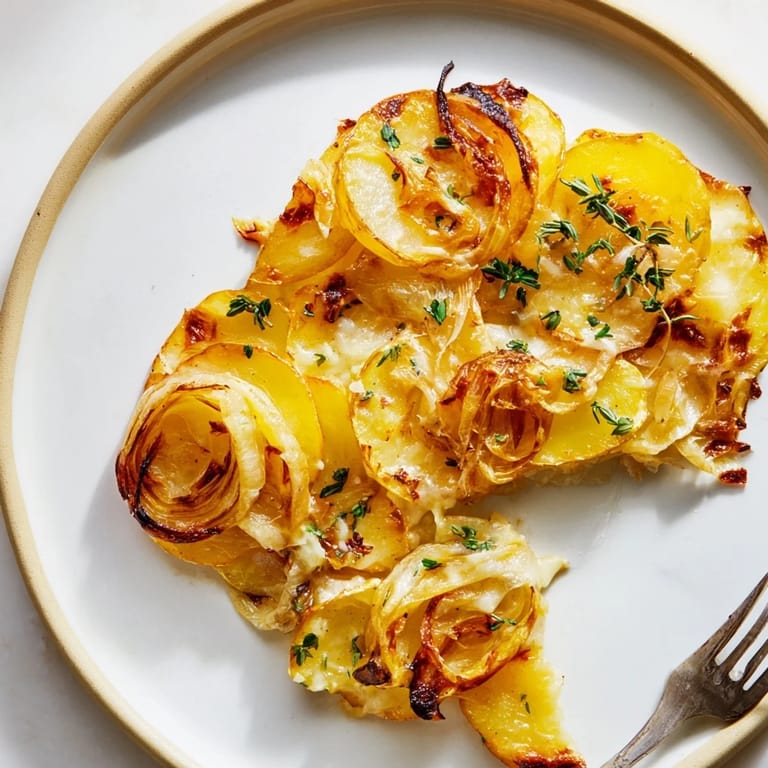
 This is comfort that doesn't apologize for being simple, and richness that comes from patience and proper technique rather than heavy cream or shortcuts. Make it once, and it becomes part of your rotation.
Common Recipe Questions
- → What type of potatoes work best for this dish?
Yukon Gold or russet potatoes are ideal, as they hold their shape well and develop a golden, tender texture when roasted.
- → How are the onions caramelized?
Onions are thinly sliced and cooked slowly in a mixture of butter and olive oil over medium-low heat until deeply golden and sweet, typically 25–30 minutes.
- → Can I use a different cheese than Gruyère?
Yes, Swiss cheese is a good substitute that melts well and complements the caramelized onions' flavor.
- → What enhances the flavor of the caramelized onions?
Fresh thyme and a splash of balsamic vinegar added near the end of cooking deepen the savory-sweet profile of the onions.
- → Is this dish suitable for gluten-free diets?
Yes, as long as all ingredients, including cheeses, are certified gluten-free, this dish is naturally gluten-free.