 Save to Pinterest
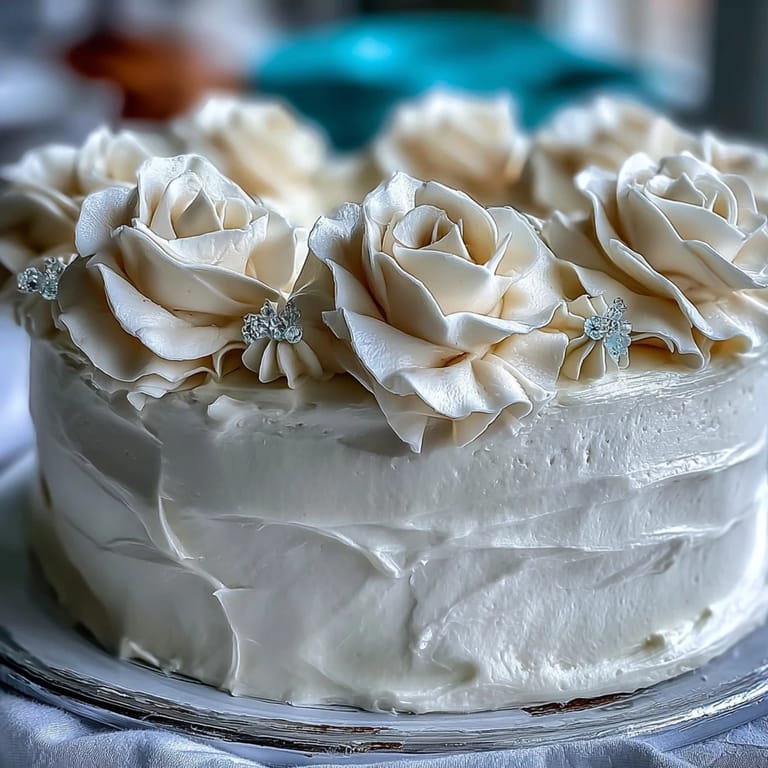
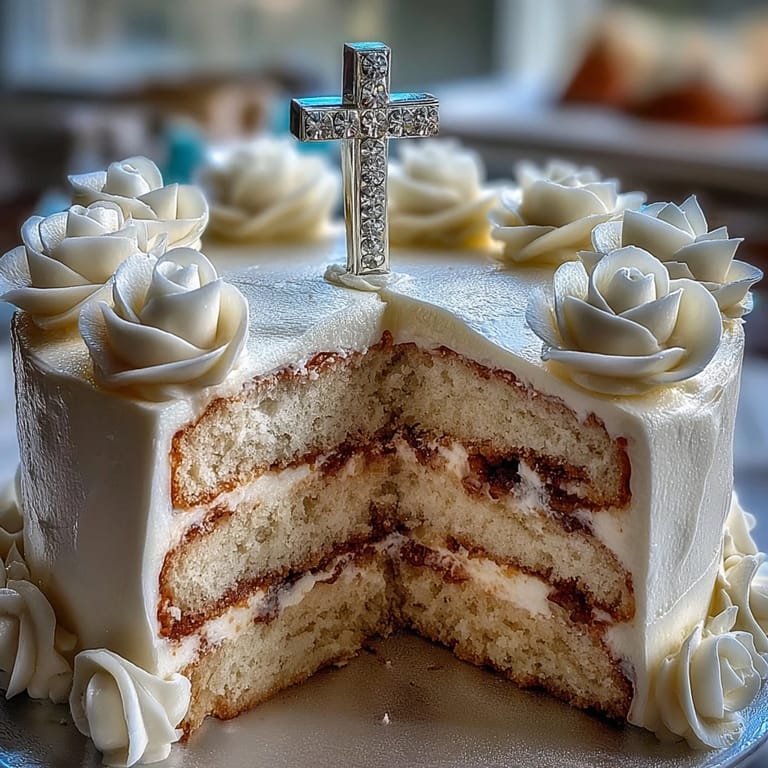
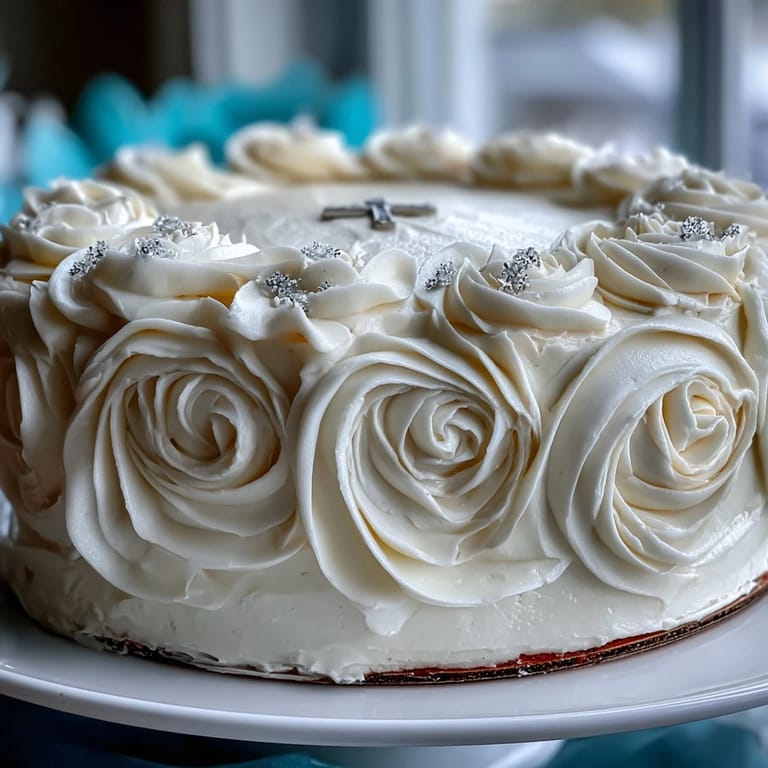
 My cousin's daughter was turning eight, and her mother asked me to bake something memorable for her First Communion celebration. I found myself standing in the kitchen on a quiet Saturday morning, thinking about how a cake could feel like prayer—layers of butter and flour stacked with intention, each rose crafted by hand like a small act of devotion. That's when I created this vanilla sponge cake, soft enough to melt on your tongue, dressed in buttercream and crowned with delicate fondant roses and a cross. It became the centerpiece of her party, and watching her face light up taught me that some desserts carry meaning beyond taste.
I'll never forget the night before the communion party when I stayed up decorating, my kitchen lit only by the overhead light, soft music playing while I shaped each rose petal. My hands ached pleasantly, and there was something meditative about it—no rushing, just focus. When I finally stepped back and saw the finished cake with its cross topper gleaming under the light, I realized I'd made something that felt sacred in its own quiet way.
Ingredients
- All-purpose flour (2 ½ cups): The foundation of your sponge—make sure it's fresh and aerated by whisking it before measuring so your cake rises evenly without gumminess.
- Baking powder (2 ½ tsp): This is your lift, but don't skip sifting it with the flour; lumps create uneven baking.
- Salt (½ tsp): A pinch enhances vanilla flavor and balances sweetness in ways you won't consciously taste but will feel.
- Unsalted butter (1 cup for sponge, 1 ½ cups for frosting): Room temperature is non-negotiable—cold butter won't cream properly and your batter will be grainy instead of fluffy.
- Granulated sugar (2 cups): Creaming this with butter for three minutes creates air pockets that make the cake tender and moist.
- Eggs (4 large): Room temperature eggs incorporate smoothly; cold ones can curdle your batter and ruin the crumb.
- Pure vanilla extract (1 tbsp): Use real extract, never imitation—it's the difference between a good cake and one you'll remember.
- Whole milk (1 cup): Room temperature milk mixes into your batter without shocking the emulsion; cold milk seizes the butter.
- Powdered sugar (5 cups): Sift this before adding to your frosting to eliminate lumps that create a grainy texture.
- White fondant (16 oz): This is your canvas for roses—buy quality fondant if you can, as cheap versions are dry and crack when you shape them.
- Green gel food coloring: Gel holds its color better than liquid and won't thin your fondant like water would.
- Edible pearls or silver dragees: These optional touches add elegance and catch light like tiny stars on your cake.
- Cross cake topper: Choose one that feels right for the occasion—it becomes the focal point everyone remembers.
Tired of Takeout? 🥡
Get 10 meals you can make faster than delivery arrives. Seriously.
One email. No spam. Unsubscribe anytime.
Instructions
- Set your oven and prepare your pans:
- Preheat your oven to 350°F and take a moment to grease and line two 8-inch round pans with parchment paper—this small act prevents sticking heartbreak later. Use a touch of butter on the pan sides and lay parchment circles on the bottoms.
- Combine your dry ingredients:
- Whisk flour, baking powder, and salt together in a medium bowl until they're evenly distributed and aerated. This ensures every part of your cake rises uniformly.
- Cream butter and sugar until clouds form:
- Beat softened butter and sugar together for a full three minutes until the mixture is pale, fluffy, and looks like the inside of a cloud. You'll hear the mixer humming and feel the transformation—don't rush this step.
- Add eggs one at a time with care:
- Drop each egg in and beat well before adding the next, letting the mixer run for about 30 seconds per egg. This gradual integration keeps your batter silky smooth and emulsified.
- Mix in vanilla, then alternate wet and dry:
- Add vanilla extract, then with your mixer on low speed, add one-third of the flour mixture, then half the milk, then another third of flour, then the remaining milk, and finally the last of the flour. Begin and end with flour—this prevents a thin, curdled batter.
- Divide and bake:
- Pour the batter evenly between your prepared pans, smooth the tops with an offset spatula, and slide them into the oven. Bake for 30 to 35 minutes until a toothpick inserted in the center comes out with just a few moist crumbs clinging to it.
- Cool with patience:
- Let cakes rest in their pans for 10 minutes—this allows the structure to set—then turn them out onto wire racks to cool completely. Resist the urge to frost warm cake; it melts into a soggy mess.
- Make your buttercream frosting:
- Beat softened butter until it's creamy, then gradually add sifted powdered sugar, vanilla, and a pinch of salt, mixing on low to avoid a sugar cloud. Add milk or heavy cream one tablespoon at a time until your frosting reaches a spreadable consistency—thick enough to hold shape but soft enough to smooth.
- Level, layer, and crumb coat:
- If your cake layers have domed tops, trim them level with a serrated knife or cake leveler so they stack evenly. Place one layer on your cake board, spread a thin layer of buttercream on top, then crown it with the second layer.
- Apply a protective crumb coat:
- Spread a very thin layer of frosting all over the cake to seal in crumbs, then chill for 20 minutes until this layer sets firm. This prevents crumbs from mixing into your final frosting layer.
- Finish with a smooth final coat:
- Apply your remaining buttercream in a thick, even layer, using an offset spatula dipped in warm water for extra-smooth application. This is your foundation for decoration.
- Craft fondant roses with your hands:
- Roll white fondant into a ball, then flatten it thin and shape it into overlapping petals curling around a center—start with a tight core and add layers, slightly cupping each petal. It's easier than it sounds and meditative to do.
- Create green leaves if you wish:
- Tint a small amount of fondant pale green with gel coloring, roll it thin, and cut leaf shapes with a knife or fondant tool. Let these air-dry slightly so they hold their shape when you place them on the cake.
- Arrange your garden of roses:
- Position your fondant roses and leaves across the frosted cake in whatever pattern feels balanced and beautiful to you. Add edible pearls or dragees in the spaces between roses for a touch of shimmer.
- Crown the cake with its cross:
- Place your cross topper at the center or slightly off-center, pressing it gently into the frosting so it stands upright and proud. This is the moment your cake becomes complete.
- Chill before serving:
- Refrigerate the finished cake for at least an hour so the frosting sets firm and the decorations stay pristine. It tastes even better after a cold rest.
 Save to Pinterest
 I think about that First Communion cake every time I see roses, real or fondant. The birthday girl is in high school now, and her mother still talks about how the cake looked on the table that morning, how the light caught the sugar pearls, how everyone felt a little more ceremonial seeing it there. That's when I understood that baking isn't just about flavor—it's about creating something beautiful enough to mark a moment forever.
Why Vanilla Sponge Is the Perfect Foundation
I've baked dozens of cakes, and I keep returning to vanilla sponge because it's humble and forgiving yet impressive when done right. The flavor doesn't compete with buttercream or fondant roses; instead, it lets them shine while standing on its own as something genuinely delicious. It's the cake equivalent of a white dress—simple, elegant, and flattering to any decoration you add.
The Science of Fondant Roses
Fondant roses intimidate everyone until they try them, and I think that's because we expect them to require some special skill when really they just need time and gentle fingers. Each petal is simply a flattened piece of fondant, slightly cupped and layered around a center ball—there's no piping, no templates, no tricks. The magic happens through repetition; your fifth rose will be noticeably better than your first, and by your tenth you'll be shaping them without thinking.
Decorating Your Celebration
A First Communion cake is more than dessert—it's a centerpiece that tells a story, so take your time with decoration and let it feel meaningful rather than rushed.
- If fondant roses feel too ambitious, pipe buttercream roses instead or simply arrange the cake with white chocolate shavings and edible pearls for elegant simplicity.
- The cross topper is your anchor point, so position everything else to draw eyes toward it rather than away from it.
- Consider the lighting where the cake will sit—a window with soft natural light makes sugar pearls glow like they're filled with heaven itself.
 Save to Pinterest
 Every time you bake this cake, you're creating an edible prayer for someone's milestone. The tenderness of the sponge, the smoothness of the frosting, the artistry of the roses—they all come together to say I cared enough to make this beautiful.
Common Recipe Questions
- → How do I achieve tender vanilla sponge layers?
Using room temperature eggs and butter, creaming butter and sugar well creates a light batter. Alternating dry ingredients with milk ensures moist, delicate layers.
- → What’s the best way to make smooth buttercream frosting?
Beat softened butter until creamy before gradually adding powdered sugar and vanilla. Adding milk or cream slowly helps reach a perfect spreading consistency.
- → How can I create realistic white fondant roses?
Roll fondant into small balls, flatten and shape them into petals, then assemble petals into roses. Tint some fondant green to make leaves for a natural look.
- → What is the ideal baking temperature and time for the sponge?
Bake at 350°F (175°C) for 30–35 minutes or until a toothpick inserted comes out clean to ensure even baking and moist texture.
- → Can this cake be customized for dietary needs?
You can substitute half the butter with vegetable oil for a lighter texture or use gluten-free flour blends to accommodate gluten sensitivities.