 Save to Pinterest
 There's something almost magical about the moment butternut squash hits a hot oven—the kitchen fills with this warm, honeyed smell that makes you want to turn down the lights and light a candle without even thinking about it. I discovered this soup on a gray October afternoon when I had one lonely squash sitting on my counter and absolutely no inspiration, just the vague sense that something comforting needed to happen. What started as throwing things together became something I now make whenever the air gets that particular kind of chill that makes you want to wrap both hands around a warm bowl.
I made this for my neighbor last November when her son came home from college, and she called it "the soup that made him stay for dinner." That single compliment stuck with me because it wasn't about technique or presentation—it was about how this simple, golden soup somehow created a moment worth lingering over. Now whenever someone mentions being tired of heavy fall meals, this is what I tell them to make.
Ingredients
- 1 large butternut squash (about 2 lbs), peeled, seeded, and cubed: This is genuinely easier than it sounds, especially if you ask your produce person to halve it for you—I've done this trick more times than I care to admit.
- 1 medium yellow onion, chopped: The aromatic foundation that makes everything taste intentional.
- 2 garlic cloves, peeled: Just enough to whisper through the finished soup without shouting.
- 1 medium carrot, peeled and chopped: Adds subtle sweetness and body that you won't notice but absolutely will miss if it's gone.
- 1 stalk celery, chopped: The quiet ingredient that brings everything into focus.
- 2 tbsp olive oil: Use something you actually like tasting; this isn't the time for the dusty bottle in the back.
- 2 tbsp unsalted butter (optional, for richness): If you're using it, it makes the soup taste like it took three times longer to make.
- 4 cups vegetable broth (low sodium preferred): Low sodium lets the squash's natural sweetness shine instead of being buried.
- 1/2 tsp ground cinnamon: This is the secret handshake that makes people ask what you did differently.
- 1/4 tsp ground nutmeg: Just a whisper—nutmeg can take over a room if you're not careful.
- 1/2 tsp ground black pepper: Freshly cracked if your grinder isn't collecting dust.
- 1 tsp kosher salt (or to taste): Always taste at the end; you might need more than you think.
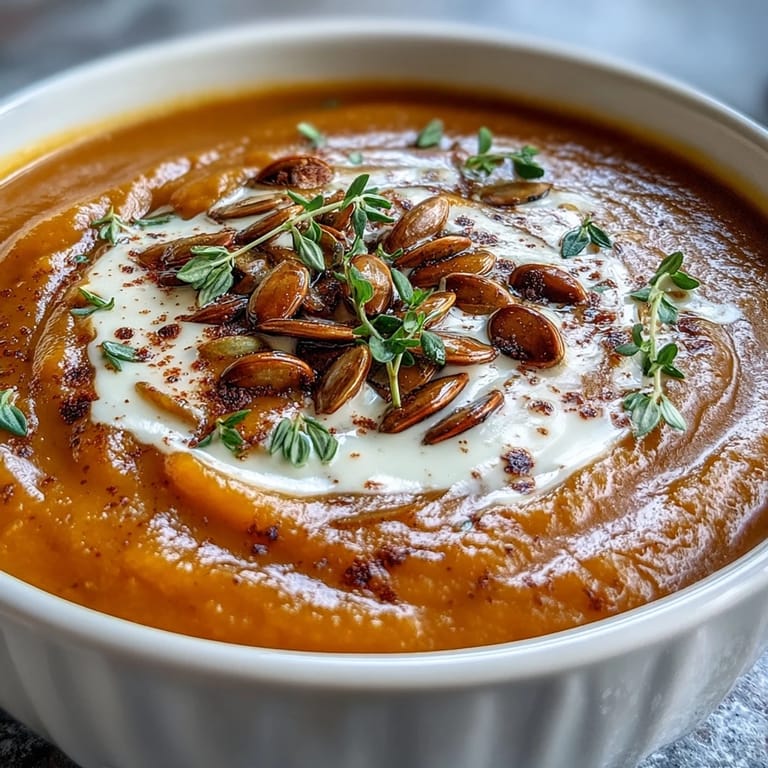
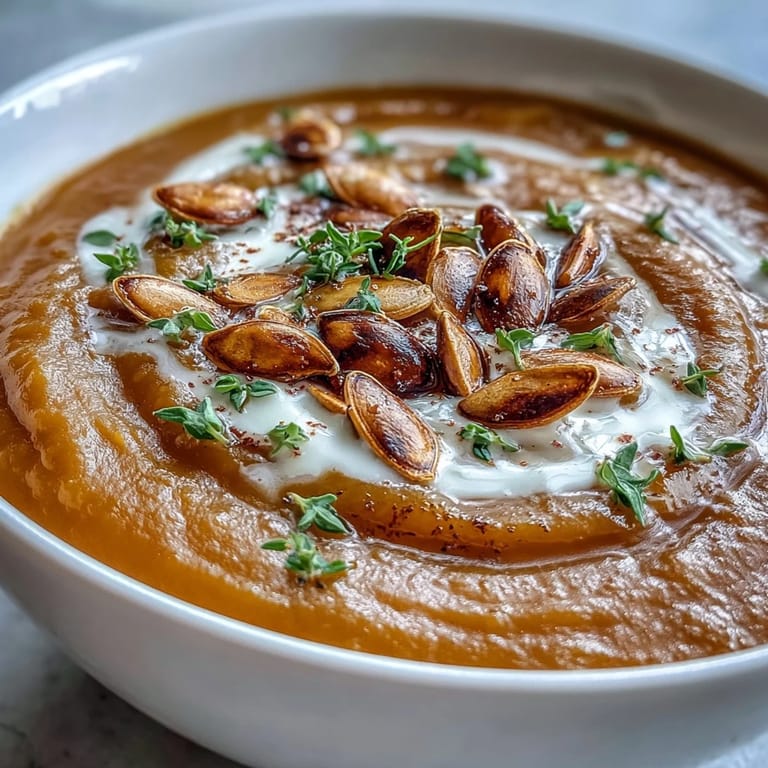
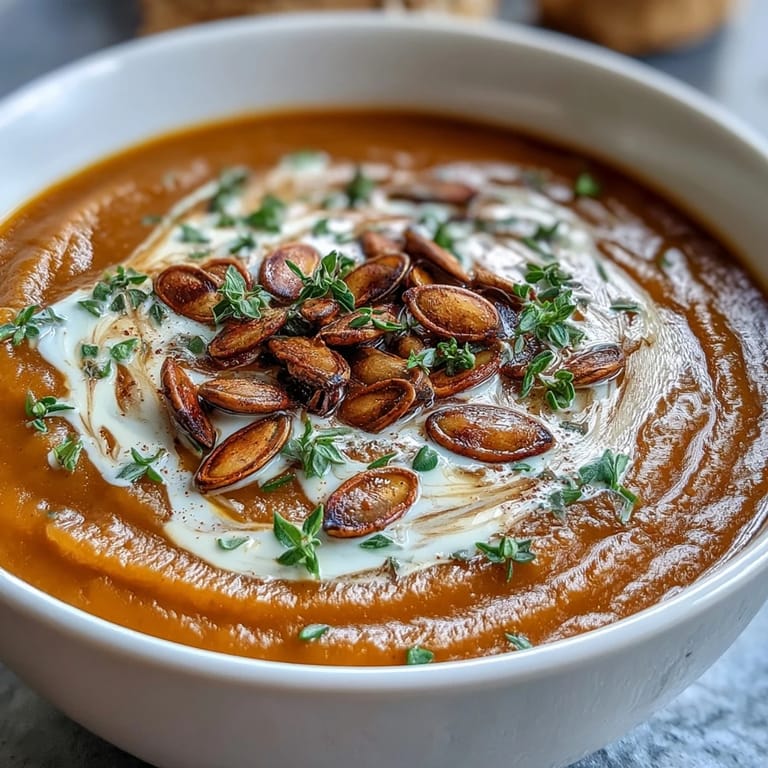
- 1/4 cup heavy cream or coconut milk for serving: A drizzle that transforms the whole thing into something luxurious.
- Toasted pumpkin seeds for garnish: They add a textural surprise and look beautiful scattered on top.
- Fresh thyme leaves for garnish: Optional but genuinely worth the three seconds it takes to add.
Tired of Takeout? 🥡
Get 10 meals you can make faster than delivery arrives. Seriously.
One email. No spam. Unsubscribe anytime.
Instructions
- Get your oven ready and prep your squash:
- Preheat to 400°F while you cube everything—if the oven is warming up, you're already winning. Toss those golden pieces with olive oil, salt, and pepper until they're coated like they're getting dressed for a party.
- Roast until the edges turn amber:
- Spread them on a lined baking sheet and let them sit for 25 to 30 minutes; you're looking for tender insides and caramelized edges that smell like they belong in a dessert. This step is where patient cooking becomes actually rewarding.
- Build your aromatic base while squash roasts:
- Heat oil and butter in a large pot, then add onion, carrot, and celery—let them soften for about 5 to 7 minutes until the kitchen smells like something's actually happening. Add garlic at the very end so it doesn't burn and turn bitter.
- Combine everything and let it simmer:
- Add the roasted squash, broth, cinnamon, nutmeg, salt, and pepper, then bring it to a boil before turning the heat down to a gentle simmer for 10 to 15 minutes. This resting time lets all the flavors actually get to know each other.
- Blend until it's smooth and velvety:
- Use an immersion blender right in the pot if you have one—it's the best tool for this because you control the texture and don't have to worry about hot soup exploding everywhere. If you're using a countertop blender, work in batches and remember the lid isn't as secure as you think it is.
- Taste and adjust like you mean it:
- This is your chance to make it yours—maybe it needs more salt, maybe another whisper of cinnamon, maybe a pinch of cayenne if you're feeling bold.
- Serve it warm with whatever makes you happy:
- A drizzle of cream, scattered pumpkin seeds, fresh thyme, or all of it if you're not holding back. Some people serve it with crusty bread, and those people are making excellent choices.
 Save to Pinterest
 There was a moment last year when my sister was going through a rough week, and she showed up at my door unannounced. I made this soup in the time it took her to tell me what was wrong, and by the time we'd finished our bowls, she was laughing about something completely unrelated to why she came over. Food doesn't fix everything, but sometimes a bowl of something warm and genuinely good comes pretty close.
About the Spices
The cinnamon and nutmeg aren't there to make this taste like dessert—they're there to amplify what butternut squash already wants to be. Cinnamon adds warmth that makes your brain register "comfort," while nutmeg brings an almost savory depth that keeps the soup from tasting one-dimensional or too sweet. I learned this the hard way by adding both to excess once and creating something that tasted like pumpkin pie soup, which sounds better in theory than it actually works in practice.
The Roasting Question
Some people suggest boiling the squash to save time, but roasting is genuinely non-negotiable if you want this to taste like something you didn't rush. The dry heat of the oven caramelizes the natural sugars, which means your final soup tastes rich and intentional instead of watery and vague. Even if you're short on time, those extra 30 minutes make the difference between "this is fine" and "this is actually good."
Serving and Storage Wisdom
This soup is one of those things that tastes even better the next day, so there's zero guilt in making a big batch and having it waiting in your fridge for when you need comfort without effort. It freezes beautifully for up to three months, which means you can make it in October and still have a taste of autumn in January when you really need it.
- If you're freezing it, leave out the cream and add it fresh when you reheat—it makes the texture better and takes thirty seconds anyway.
- Reheat gently over medium heat and add a splash of broth if it's gotten too thick; soup tends to tighten up as it sits.
- Serve with good bread, a simple salad, or absolutely nothing if you're eating alone and that's the whole meal you need.
 Save to Pinterest
 This soup has taught me that the best recipes aren't the ones that look impressive on a plate—they're the ones that taste like someone made time to care about you. Make this for people you like, or make it for yourself on a night when you need something that feels like a hug.
Common Recipe Questions
- → Can I make this soup ahead of time?
Absolutely. This soup actually tastes better the next day as flavors have time to meld. Store in an airtight container in the refrigerator for up to 4 days. Reheat gently on the stovetet, adding a splash of broth if needed to thin the consistency.
- → Can I freeze butternut squash soup?
Yes, this soup freezes beautifully. Cool completely before transferring to freezer-safe containers, leaving some space for expansion. It will keep well for up to 3 months. Thaw overnight in the refrigerator and reheat on the stovetop, stirring occasionally.
- → Do I have to roast the squash first?
Roasting isn't strictly required, but it makes a significant difference. Roasting concentrates the squash's natural sugars and creates caramelized edges that add depth of flavor. If you're short on time, you can simmer raw cubed squash directly in the broth until tender.
- → What can I use instead of an immersion blender?
A countertop blender works perfectly—just cool the soup slightly and blend in batches, never filling the blender more than halfway. You can also use a potato masher for a chunkier texture, though the soup won't be as silky smooth.
- → How can I make this soup creamier without dairy?
Full-fat coconut milk adds rich creaminess while keeping it vegan. You can also blend in a peeled potato during cooking for natural thickness, or stir in a tablespoon of tahini for nutty depth and silky body.
- → What spices work well in this soup?
Beyond cinnamon and nutmeg, try adding a pinch of ground ginger, cardamom, or coriander for warmth. A dash of smoked paprika adds subtle depth. Fresh herbs like sage or rosemary can be added during simmering for aromatic complexity.