 Save to Pinterest
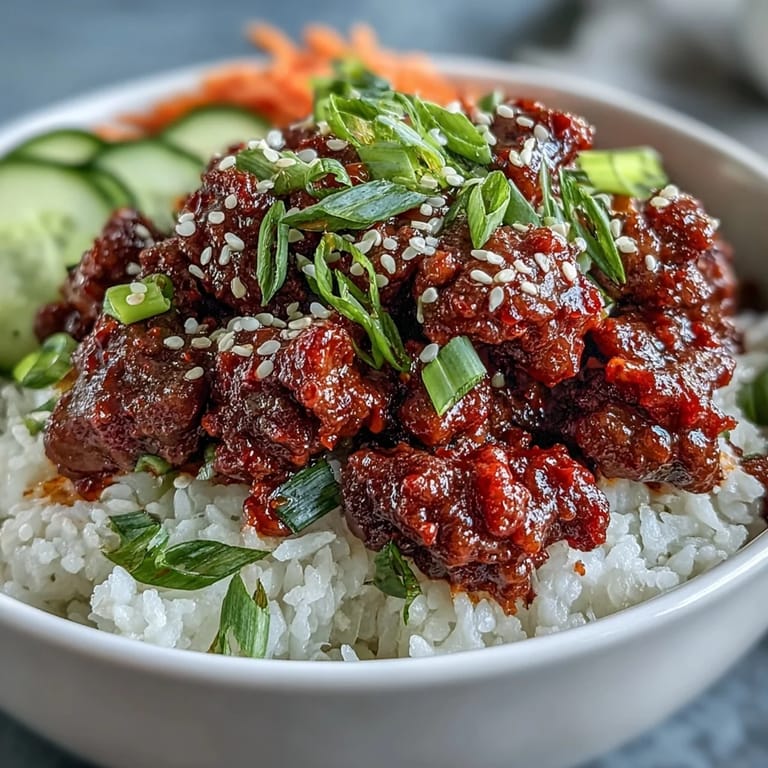
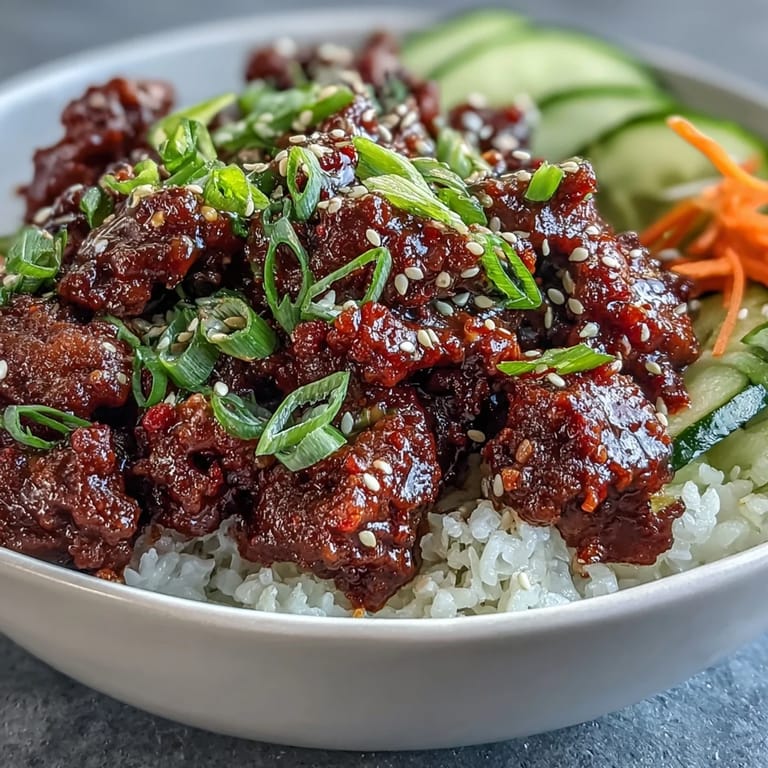
 My coworker Sarah showed up to lunch one day with this Korean beef bowl, and the aroma hit me before I even saw the container—savory, spicy, alive. She mentioned tossing it together in about twenty minutes some weeknight when she couldn't decide between meal prepping and just eating something delicious. One bite and I understood the appeal: that gochujang sauce clung to every grain of rice like it belonged there, tangy and complex without demanding hours in the kitchen. I've been making it ever since, usually on nights when I need comfort but don't have the patience for it.
I made this for my nephew's study break last semester, and he ate two bowls without looking up from his laptop. His roommate wandered in halfway through and asked what smelled so good, then sat down for a bowl too. That's when I realized this dish has a quiet magic—it's humble enough for a weeknight solo dinner but impressive enough to feed guests without making you feel like you're serving leftovers. Now whenever he comes home, he texts asking if I'm making the Korean beef bowl.
Ingredients
- Lean ground beef: Choose beef that isn't too fatty or it'll end up swimming in grease instead of clinging to that spicy sauce—1 pound feeds four people well.
- Gochujang: This fermented chili paste is the whole soul of the dish, bringing umami depth and gentle heat that builds rather than burns; find it in Asian markets or online.
- Low-sodium soy sauce or tamari: The salt base that ties everything together, though tamari saves you if you're watching gluten.
- Brown sugar: Balances the spice and fermented kick with just enough sweetness to make your mouth want another bite.
- Sesame oil: A small amount goes a long way, adding that toasted, nutty backbone that makes people ask what your secret ingredient is.
- Garlic and ginger: These aren't background players—they bloom when you hit them with heat, filling your kitchen with that unmistakable Korean-kitchen smell.
- Rice vinegar: The acidic brightness that prevents the sauce from tasting flat or one-note.
- Rice or cauliflower rice: Your canvas; regular rice is traditional and forgiving, while cauliflower rice keeps things lean without sacrificing satisfaction.
- Fresh toppings: Cucumber, carrot, green onion, and sesame seeds aren't decorative—they add crunch, freshness, and the textural contrast that makes each bite interesting.
Tired of Takeout? 🥡
Get 10 meals you can make faster than delivery arrives. Seriously.
One email. No spam. Unsubscribe anytime.
Instructions
- Get the pan hot and brown the beef:
- Pour sesame oil into your skillet over medium-high heat and let it shimmer for a moment—you'll smell when it's ready. Add ground beef and break it apart with your spatula, letting it toast and caramelize rather than steam, which takes about 4-5 minutes.
- Wake up the aromatics:
- Once the beef is browned, add minced garlic and grated ginger, stirring constantly for about 1 minute until the smell makes you pause and appreciate what you're doing.
- Build the sauce:
- Add gochujang, soy sauce, brown sugar, rice vinegar, and black pepper all at once, stirring well to coat every piece of beef. Let it simmer for 2-3 minutes—the sauce will thicken slightly and smell even better.
- Taste and adjust:
- This is crucial: taste a small spoonful and decide if it needs more heat, salt, or sweetness before you plate it. You're in control here.
- Build your bowls:
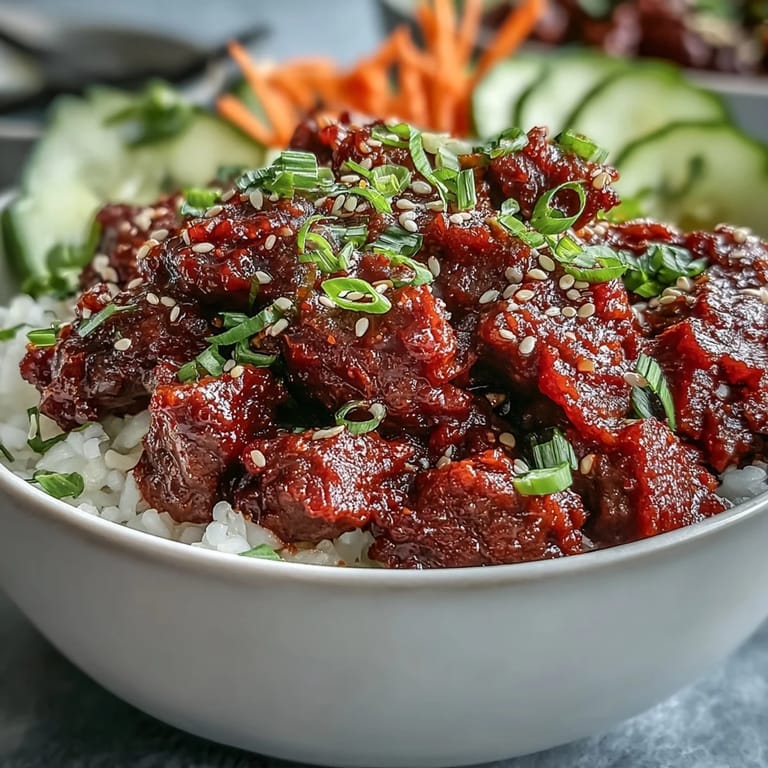
- Divide cooked rice among bowls—about 1 cup per person is generous—and top with a generous spoonful of the Korean beef and all its glossy sauce.
- Add the fresh finishing touches:
- Layer on sliced cucumber, shredded carrot, green onions, and a pinch of toasted sesame seeds; add sliced fresh chili or a spoonful of kimchi if you want extra depth and funk.
 Save to Pinterest
 My partner was skeptical about gochujang the first time I made this, worried it'd be too spicy or too strange. She took one bite and immediately asked if we could make it twice a week. Now she makes it herself on nights I'm working late, and I come home to this gorgeous, steaming bowl waiting. That's when I realized this dish had crossed from recipe into ritual.
Why This Works as a Weeknight Dinner
The beauty here is timing: while your rice cooks, you're only actively cooking for about ten minutes, which means you can set the table, pour a drink, or just breathe a little before everything's ready. There's no babysitting, no unexpected issues, and no ingredients that need special ordering once you've got gochujang in your pantry. The component-based structure also means leftovers stay crispy—store the sauce separately and reassemble the next day for nearly the same experience.
Adapting It to What You Have
This bowl is forgiving in ways that matter when you're cooking on the fly. Ground turkey or chicken works just as well as beef and cooks in the same time, taking on that spicy-savory glaze beautifully. If you don't have ginger, skip it rather than substituting—the garlic and gochujang are doing the heavy lifting. For toppings, use whatever vegetables need eating: radishes, shredded daikon, thinly sliced red onion, or steamed broccoli all feel natural here.
Bringing It All Together
This Korean beef bowl reminds me why simple food done well matters more than complicated food done okay. The magic isn't in a long ingredient list or precise technique—it's in letting good flavors shine and eating something that feels both approachable and exciting on the same plate. Once you make it once, you'll find yourself reaching for it again and again, each time feeling like you've discovered something personal.
- Prep your toppings before you start cooking so assembly feels relaxed, not rushed.
- If you find gochujang intimidating, start with a tablespoon and a half and work your way up next time you make it.
- This bowl tastes even better the next day when all the flavors have had time to get to know each other.
 Save to Pinterest
 This dish lives in that sweet spot between comforting and exciting, familiar and adventurous. Every time I make it, I'm reminded that the best recipes are the ones you actually cook, the ones that fit into real life without apology.
Common Recipe Questions
- → What does gochujang taste like?
Gochujang is a Korean fermented chili paste with a complex flavor profile. It's savory, slightly sweet, and moderately spicy with umami depth from fermentation. The heat level is milder than fresh chilies but still provides a pleasant kick.
- → Can I make this ahead of time?
The seasoned beef stores beautifully in the refrigerator for 3-4 days. Reheat gently in a skillet with a splash of water. Prepare toppings fresh and cook rice when ready to serve for best texture.
- → Is gochujang gluten-free?
Traditional gochujang may contain wheat, but many brands now offer gluten-free versions. Check labels carefully or substitute with a combination of miso paste and chili flakes if needed.
- → Can I use other meats?
Ground turkey, chicken, or pork work well as lighter alternatives. Adjust cooking time slightly—poultry may need a minute or two longer to brown properly. The sauce complements any ground meat beautifully.
- → How can I reduce the spice level?
Start with half the gochujang and taste before adding more. Adding extra brown sugar helps balance heat. Serve with cooling toppings like cucumber slices or plain yogurt on the side.
- → What sides pair well with this bowl?
Serve alongside steamed bok choy, pickled vegetables, or a simple cucumber salad. Miso soup and kimchi make traditional accompaniments. For a complete meal, add a soft fried egg on top.