 Save to Pinterest
 One evening, I was too tired to build a proper sauce, too hungry to wait, and somehow convinced myself that cooking pasta directly in milk might actually work. It felt reckless in the best way, and twenty minutes later I had a bowl of the creamiest, most effortless pasta I'd ever made. Now it's what I reach for when I need comfort without the fuss.
I made this for a friend who'd just moved into her first apartment with basically no kitchen equipment. She stood at her stove with a single deep skillet, watching the milk slowly thicken around the pasta, and I watched her face change from skeptical to genuinely delighted. That's when I knew this recipe was the real deal.
Ingredients
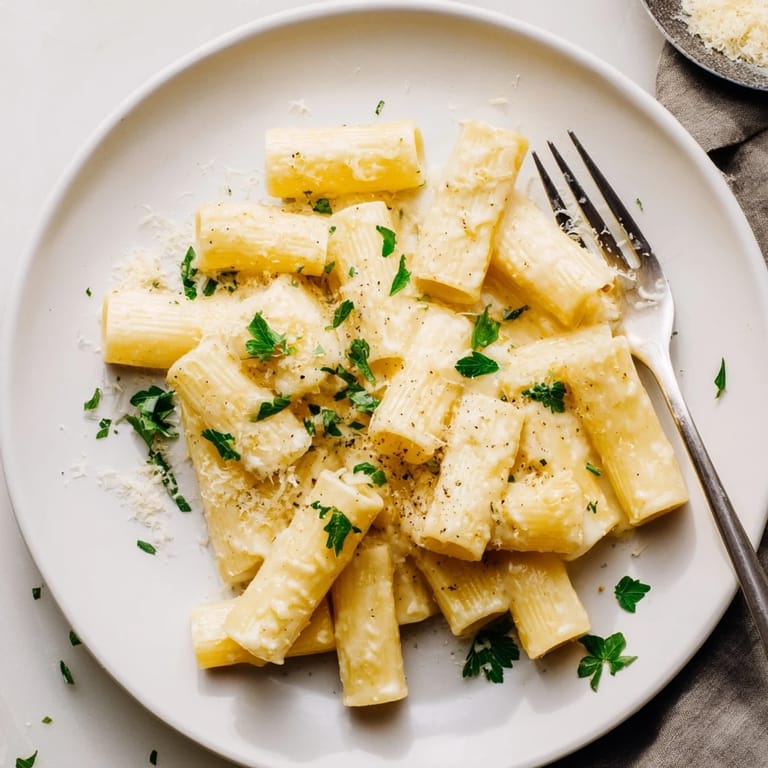
- Short pasta (penne, fusilli, or rigatoni): 350 g or 12 oz works best because the shapes cradle the milk and cook evenly, unlike long thin pasta which gets tangled and cooks unevenly.
- Whole milk: 1 liter or 4 cups is the foundation, and whole milk matters because it has enough fat to create actual creaminess rather than thinning out.
- Unsalted butter: 60 g or 1/4 cup gets bloomed with garlic first, building flavor before anything else hits the pan.
- Grated Parmesan cheese: 60 g or 2/3 cup finishes the sauce and makes it luxurious, so buy real stuff and grate it yourself.
- Garlic cloves, minced: 2 cloves sautéed briefly until fragrant but never brown, because burnt garlic ruins everything.
- Salt: 1/2 teaspoon or to taste, added early so it seasons the milk as it cooks.
- Freshly ground black pepper: 1/4 teaspoon brings a subtle bite that balances the richness.
- Nutmeg: A pinch if you want it, and honestly it's optional but transforms the dish if you use it.
- Fresh parsley: Chopped and optional, but it gives a fresh green moment at the end.
- Extra Parmesan: For serving, because more cheese is never wrong.
Tired of Takeout? 🥡
Get 10 meals you can make faster than delivery arrives. Seriously.
One email. No spam. Unsubscribe anytime.
Instructions
- Melt butter with garlic:
- Heat a large deep skillet over medium and let the butter foam and turn golden, then add minced garlic and listen for that gentle sizzle. Stay for about a minute until your kitchen smells like garlic but the garlic itself is still pale and soft, never brown.
- Warm the milk gently:
- Pour in the cold milk slowly and watch it gradually warm, stirring occasionally until you see the gentlest steam rising. This is not a boil situation, just a quiet simmer that lets flavors meld instead of rushing.
- Add pasta and seasonings:
- Dump in the pasta, salt, pepper, and nutmeg if using, then stir immediately so nothing sticks to the bottom. The pasta will look like it's drowning at first, but that's exactly right.
- Cook and stir frequently:
- For the next 12 to 15 minutes, keep stirring every minute or so and watch as the milk gradually thickens and the pasta softens. The sauce builds as the pasta releases its starch, creating something creamy without cream, and you'll feel the moment when it transitions from milky soup to silky sauce.
- Finish with Parmesan:
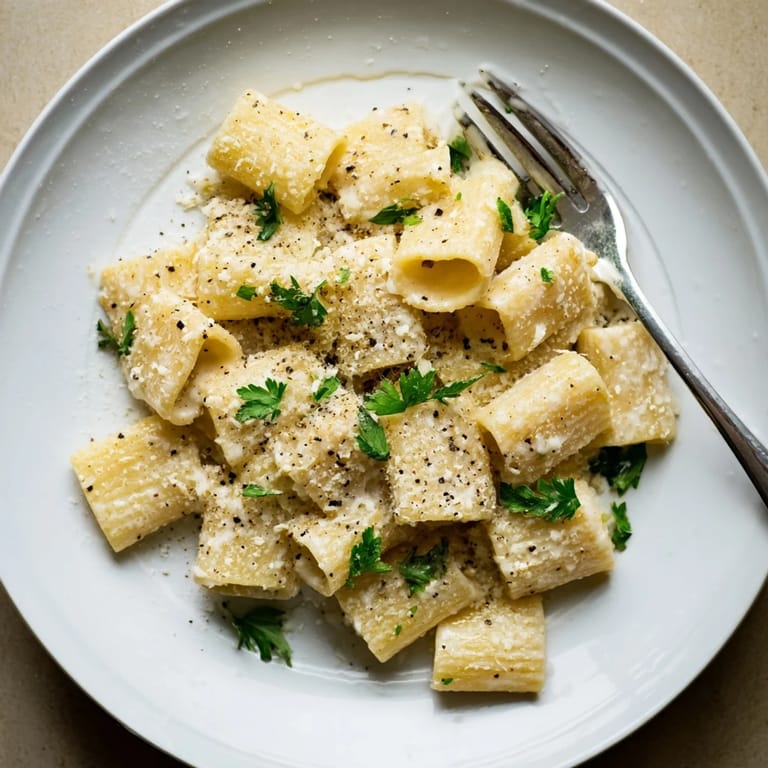
- When the pasta is nearly tender and the sauce coats a spoon, stir in the grated Parmesan and taste it, adjusting salt and pepper until it tastes like the best version of itself. Remove from heat immediately so the cheese melts smoothly without any graininess.
- Serve right away:
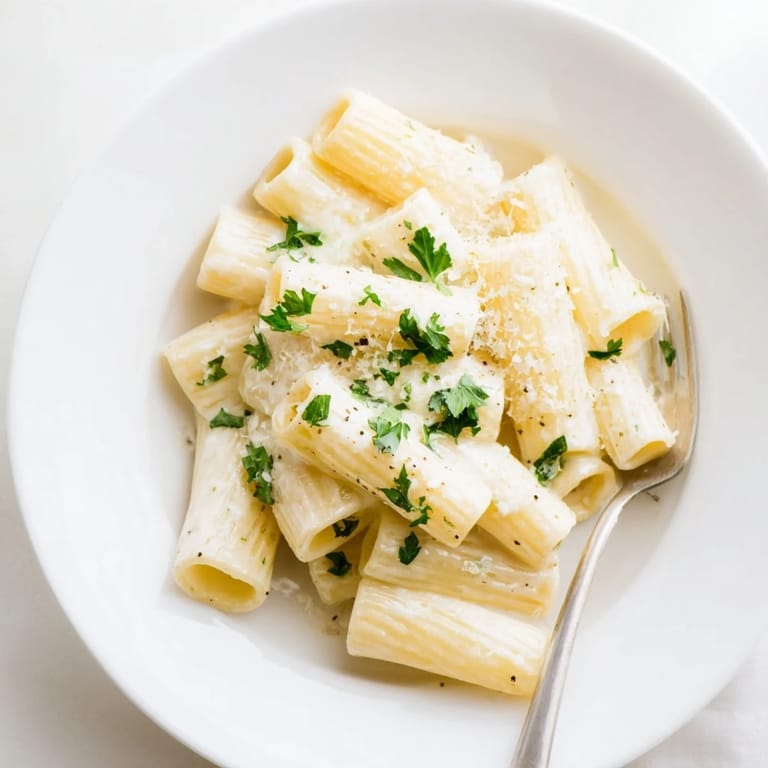
- Plate it immediately with a spoonful of that creamy sauce, a scatter of fresh parsley if you have it, and extra Parmesan for anyone who wants more richness.
 Save to Pinterest
 My daughter asked for seconds before she'd even finished her first bowl, which never happens. I realized then that sometimes the most luxurious moments come from the simplest decisions, the ones that feel almost accidental.
Texture and Temperature Matter
The magic of this pasta lives in heat management. That gentle simmer transforms cold milk into a silky cloak that clings to each piece without ever becoming a thick glue. Feel the difference in your spoon as you stir, watching the sauce go from loose to thickly luxurious, and stop cooking the second it reaches that point. Overcooking tightens everything, leaving you with broken sauce instead of the flowing richness you wanted.
Flavor Layers and Pairings
The nutmeg seems strange until you taste it, and then you'll understand why it whispers through cream sauces in restaurant kitchens. A crisp white wine like Pinot Grigio cuts through the richness beautifully, and honestly a simple green salad with sharp lemon dressing becomes essential rather than optional when you're eating something this creamy. Black pepper should taste slightly assertive, not shy, because it's what keeps the whole thing from feeling boring.
Variations That Keep It Interesting
The base recipe is perfect on its own, but sometimes you want to make it your own. Sautéed mushrooms stirred in during the last few minutes add an earthy depth, while wilted spinach brings freshness and color. A spoonful of mascarpone or cream cheese at the very end makes it even richer for special moments, and crispy bacon bits sprinkled on top transform it into something showier without any real effort. Fresh thyme or sage could replace the parsley, and if you want protein, cooked ham tossed in at the end feels natural rather than bolted on.
- Mushrooms should be sautéed separately in butter first so they release their liquid and get golden before meeting the cream sauce.
- Any additions should go in during the last minute so they warm through without cooking further and losing their character.
- Taste after every addition because each one changes the salt balance slightly.
 Save to Pinterest
 This dish has taught me that sometimes the best meals come from taking a risk, from trusting that simplicity and good ingredients will carry the day. Make it tonight.
Common Recipe Questions
- → What type of pasta works best for this dish?
Short pasta shapes like penne, fusilli, or rigatoni hold the creamy sauce well and cook evenly in one pot.
- → Can I use low-fat milk instead of whole milk?
Whole milk provides richness and creaminess, but low-fat milk can be used for a lighter version, though the sauce may be less silky.
- → How do I prevent the pasta from sticking during cooking?
Stir frequently while simmering and ensure the milk is at a gentle simmer to allow even cooking without sticking.
- → Is it possible to add vegetables to this dish?
Yes, sautéed mushrooms, spinach, or peas can be stirred in near the end to add color and nutrition.
- → What can I use to thicken the sauce if it’s too runny?
Continue simmering uncovered while stirring, or add a splash more milk and Parmesan to encourage thickening and creaminess.