 Save to Pinterest
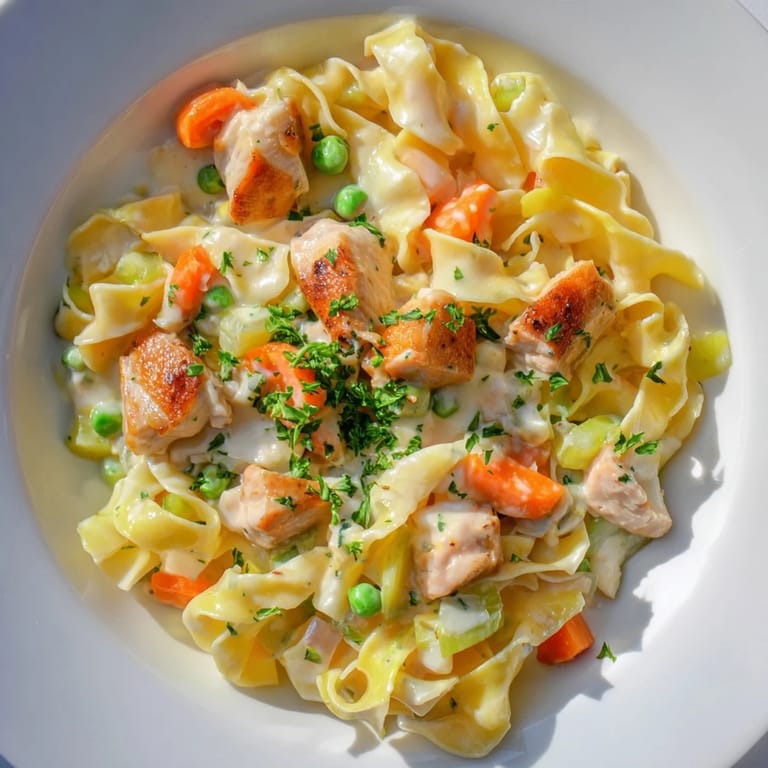
 There's something about the smell of butter hitting a hot pan that makes me feel like I'm cooking something real. Years ago, I'd watch my mom pull together this chicken and noodle dish on nights when we needed comfort more than complexity, and somehow it always felt like the most elegant thing on the table. The cream sauce would catch the kitchen light, and everyone would just go quiet, forks moving steadily. I learned then that the best meals don't announce themselves—they just wrap around you.
I made this for a friend during a rough week, and watching her face when she took the first bite—that moment where everything else just falls away—reminded me why I cook. The egg noodles practically dissolved into the sauce, and the chicken was so soft you barely needed to cut it. We didn't talk much that night, just ate and existed in the warmth of something this simple and true.
Ingredients
- Boneless, skinless chicken breasts or thighs, cut into bite-sized pieces (500 g or 1.1 lbs): Thighs stay juicier if you have them, but breasts work beautifully too—just don't skip seasoning them first.
- Salt (1/2 tsp) and black pepper (1/4 tsp): Season the chicken generously; this is your foundation.
- Unsalted butter (2 tbsp) and olive oil (1 tbsp): Together they create a fat that browns the chicken without burning.
- Yellow onion, finely chopped (1 medium): Onions become almost invisible in the sauce, but they're doing all the work.
- Garlic cloves, minced (2): Don't skip this—add it after the onions soften or it'll turn bitter.
- Carrots, peeled and sliced (2 medium) and celery stalks, sliced (2): These add gentle sweetness and body to everything.
- All-purpose flour (2 tbsp): This is your thickening agent, but cook it briefly so it doesn't taste floury.
- Low-sodium chicken broth (480 ml or 2 cups), whole milk (240 ml or 1 cup), and heavy cream (120 ml or 1/2 cup): The trinity of the sauce—broth gives depth, milk keeps it silky, cream makes it luxurious.
- Dijon mustard (1 tsp), dried thyme (1 tsp), dried parsley (1/2 tsp), and paprika (1/2 tsp): Mustard adds intrigue without tasting obvious; the herbs whisper rather than shout.
- Wide egg noodles (250 g or 8 oz): Wide noodles catch the sauce better than thin ones.
- Frozen peas (60 g or 1/2 cup): They add color and a tiny burst of sweetness at the end.
- Fresh parsley, chopped (2 tbsp, optional): A green finish that makes people think you were more careful than you were.
Tired of Takeout? 🥡
Get 10 meals you can make faster than delivery arrives. Seriously.
One email. No spam. Unsubscribe anytime.
Instructions
- Season and sear the chicken:
- Toss the chicken pieces with salt and pepper, then heat your butter and oil in a large pot or deep skillet over medium-high heat until the edges shimmer. You're looking for a golden crust on the chicken, which takes about 5 to 6 minutes total—don't crowd the pan or it'll steam instead of brown.
- Build your vegetables:
- Once the chicken comes out, lower the heat slightly and add your onion, carrots, and celery to the same pot. Let them soften for 4 to 5 minutes, stirring occasionally, then add the garlic for just 1 minute more so it wakes up without turning dark.
- Make the roux:
- Sprinkle the flour over the vegetables and stir constantly for 1 to 2 minutes—this cooks out the raw flour taste and thickens the sauce later on.
- Create the sauce:
- Slowly pour in your chicken broth while whisking so no lumps form, then add the milk and cream. Stir in the mustard, thyme, parsley, and paprika, then taste and adjust the salt and pepper to your preference.
- Simmer and thicken:
- Bring everything to a gentle simmer and let it cook for about 5 minutes, stirring often—you'll feel it thickening against the spoon, which is oddly satisfying.
- Cook the noodles:
- In a separate pot, cook your egg noodles according to the package instructions, drain them well, and set aside so they don't stick together.
- Bring it all together:
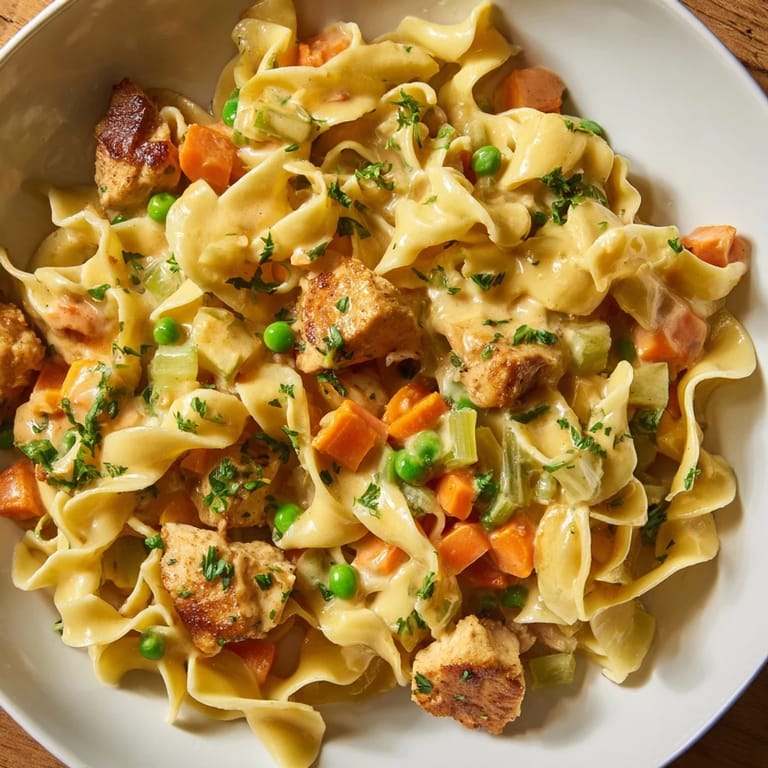
- Return the chicken to the sauce along with the frozen peas and simmer for 2 to 3 minutes until everything is heated through. Add the cooked noodles and toss gently until every strand is coated in that creamy goodness.
- Finish and serve:
- Scatter fresh parsley over the top if you have it, and serve while it's still warm enough to send up a little steam.
 Save to Pinterest
 The real magic of this dish is that it feels both elegant and entirely unpretentious, like something you'd make for yourself on a Tuesday or for people you love without needing an occasion. It's the kind of food that makes you feel taken care of, whether you're the one eating or the one doing the cooking.
The Creamy Sauce Secret
The ratio of broth to cream is what separates a thin sauce from one that clings to every noodle without turning into soup. I've learned that low-sodium broth lets the herbs and mustard shine without getting overwhelmed by salt, and adding the liquids gradually—while whisking constantly—is the difference between something silky and something lumpy. The flour acts as a thickening agent, but only if you cook it just long enough to remove the raw flour taste, about a minute or two. If you find yourself staring at a sauce that's still too thin after simmering, don't panic—a slurry of a tablespoon of flour mixed with cold water, whisked in slowly, will save you.
Why the Noodles Cook Separately
Cooking the noodles in their own pot instead of directly in the sauce is one of those choices that seems fussy until you realize it gives you total control. The noodles stay exactly as tender as you want them, and they don't absorb all the sauce before it even hits the plate. This separation also means you can make the sauce ahead of time and add the noodles just before serving, which is quietly one of the best meal-prep tricks I've discovered.
Variations and Moments to Remember
This dish is forgiving enough to welcome changes based on what you have or what you're craving. On nights when I want to add depth, I'll splash in a little white wine after the vegetables soften, letting it cook down before I make the roux. Mushrooms sliced thin and added with the carrots bring an earthy richness that some people expect the moment they taste it. A rotisserie chicken from the store, shredded, cuts the cooking time in half and still tastes wonderful. The one constant is that someone at the table will always ask for seconds, and you'll find yourself ladling more onto their plate while they tell you why they love it.
- Mushrooms, sliced thin and added with the vegetables, add an earthy depth that makes the sauce taste more complex.
- A splash of white wine after sautéing the vegetables brings brightness that balances all the cream.
- A crisp green salad or steamed broccoli on the side cuts through the richness and feels like balance on the plate.
 Save to Pinterest
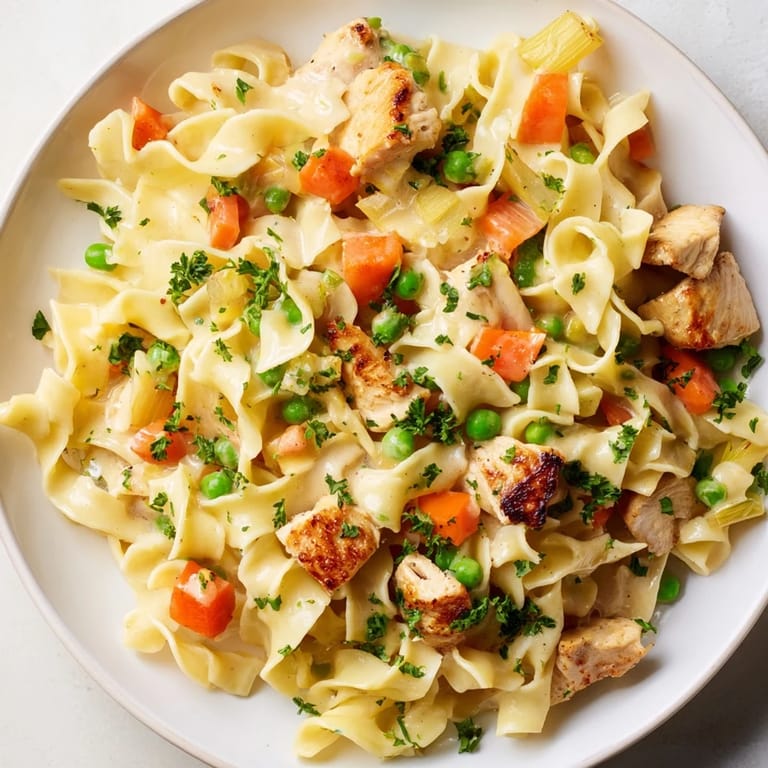
 This is the kind of recipe that teaches you about yourself as a cook—whether you're someone who follows directions exactly or someone who trusts instinct. Either way, you'll end up with something warm and nourishing that tastes like care, which is really all any of us are looking for.
Common Recipe Questions
- → What type of chicken works best?
Boneless, skinless chicken breasts or thighs are ideal for tender, even cooking and absorbing flavors well.
- → Can I use different noodles?
Wide egg noodles are preferred for their texture, but pasta like fettuccine or pappardelle can be good alternatives.
- → How do I thicken the sauce?
A roux made from flour and butter is cooked before adding broth and cream, ensuring a smooth, thickened sauce.
- → What herbs enhance the dish?
Dried thyme, parsley, and a slight touch of paprika bring out earthy and fresh notes that complement the creaminess.
- → Can vegetables be varied?
Carrots, celery, and onion provide a solid base, but mushrooms or peas can be added for extra texture and flavor.