 Save to Pinterest
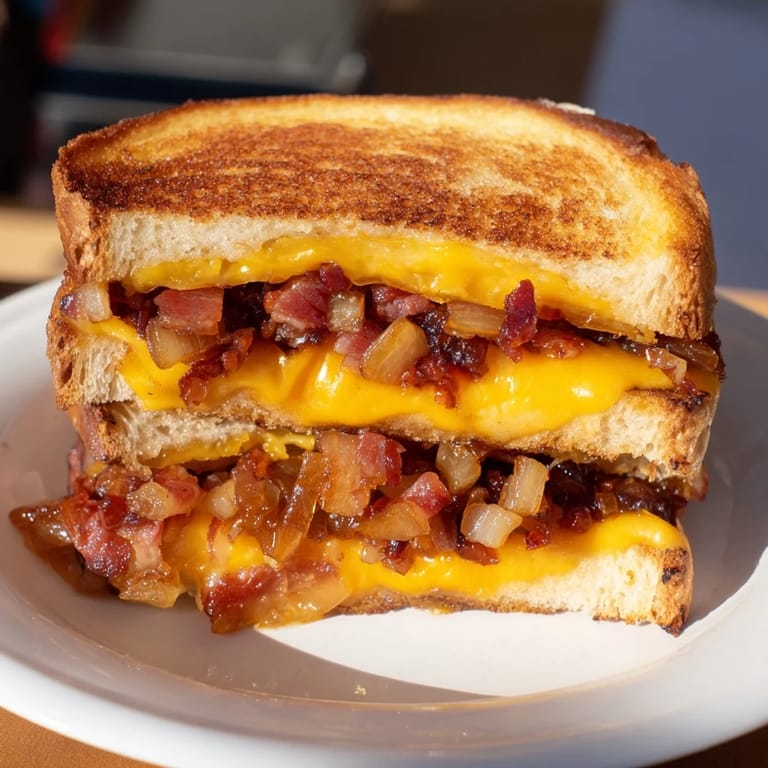
 The first time I made this sandwich, I'd just discovered a jar of homemade bacon jam at a farmer's market, and I couldn't resist the impulse to layer it between two types of cheese in buttered bread. What started as an experiment turned into something I couldn't stop thinking about—that smoky-sweet depth against sharp cheddar and nutty Gruyère created a conversation about melted cheese that felt somehow more interesting than any grilled cheese I'd made before.
I made these for my brother on a cold Saturday afternoon, and he sat there for a moment after the first bite, just looking at the sandwich with this quiet appreciation that said more than words could. That's when I realized this recipe wasn't just about layering ingredients—it was about giving someone a moment where everything tastes exactly right.
Ingredients
- Thick-cut bacon, 8 oz: Use the good stuff here; thin bacon dissolves into nothing when you cook it down, but thick-cut holds its texture and contributes real substance to the jam.
- Yellow onion, 1 medium: The sweetness that builds as it caramelizes becomes the backbone of the whole jam—don't rush this step or you'll miss what makes it special.
- Garlic, 2 cloves: Minced fine so it melts into the mix rather than biting back; one clove might feel cautious, but two cloves ensures you taste it without it overpowering anything.
- Brown sugar, 2 tbsp: Adds a subtle molasses note that plain sugar can't match; it rounds out the vinegars in a way that feels less acidic and more developed.
- Apple cider vinegar and balsamic vinegar, 1 tbsp each: Together they create a depth that neither one could alone—cider vinegar brings brightness while balsamic adds something almost wine-like.
- Maple syrup, 1 tbsp: A small amount that whispers rather than shouts, tying the whole flavor together with something almost floral.
- Smoked paprika, ½ tsp: This is where the smoke lives; it echoes the bacon without being redundant and adds a complexity that makes people ask what's in this.
- Sourdough or country bread, 8 slices: The structure matters—you need bread that won't collapse under the weight of cheese and jam, and sourdough's tang complements everything else beautifully.
- Sharp cheddar cheese, 8 oz: Sharp cheddar has enough personality to stand up to the bacon jam; mild cheddar would disappear entirely.
- Gruyère cheese, 4 oz: The nuttiness and how it melts creates an almost creamy texture that sharp cheddar alone can't achieve; together they're greater than the sum of their parts.
- Unsalted butter, 4 tbsp: Softened butter spreads evenly and browns to golden without burning, creating that essential crust that holds everything together.
Tired of Takeout? 🥡
Get 10 meals you can make faster than delivery arrives. Seriously.
One email. No spam. Unsubscribe anytime.
Instructions
- Render the bacon until it shatters:
- Watch the pieces go from raw to cooked to crispy—when they shatter between your fingers instead of bend, they're ready. This takes about eight to ten minutes over medium heat, and the smell will fill your whole kitchen with a signal that something good is happening.
- Build the base with caramelized onion:
- Leave about a tablespoon of bacon fat in the pan and add your diced onion, stirring every minute or so. It'll seem dry at first, then it starts to soften, then it turns golden, then it deepens to a rich amber—that last stage is when the sweetness develops, around eight to ten minutes total.
- Wake it up with garlic:
- Add minced garlic and cook just until fragrant, maybe sixty seconds—this isn't about browning it but about releasing its flavor into the fat where the onions are sitting.
- Combine everything into the jam:
- Return the crispy bacon, then add brown sugar, both vinegars, maple syrup, smoked paprika, and pepper all at once. The mixture will smell sharp and complex; you're building toward something that tastes like a balance rather than any single note.
- Simmer low and stir often:
- This is the patience part, about ten minutes of medium-low heat where the mixture thickens and the individual flavors begin to marry. You'll know it's ready when it coats the back of a spoon and looks almost like actual jam, and when you taste a tiny spoonful, you stop and appreciate what's happened in that pan.
- Let it cool just enough to work with:
- While it cools, you can assemble the sandwiches; the jam will continue to set as it cools, so don't wait until it's completely cold or it becomes harder to spread.
- Spread jam on four bread slices:
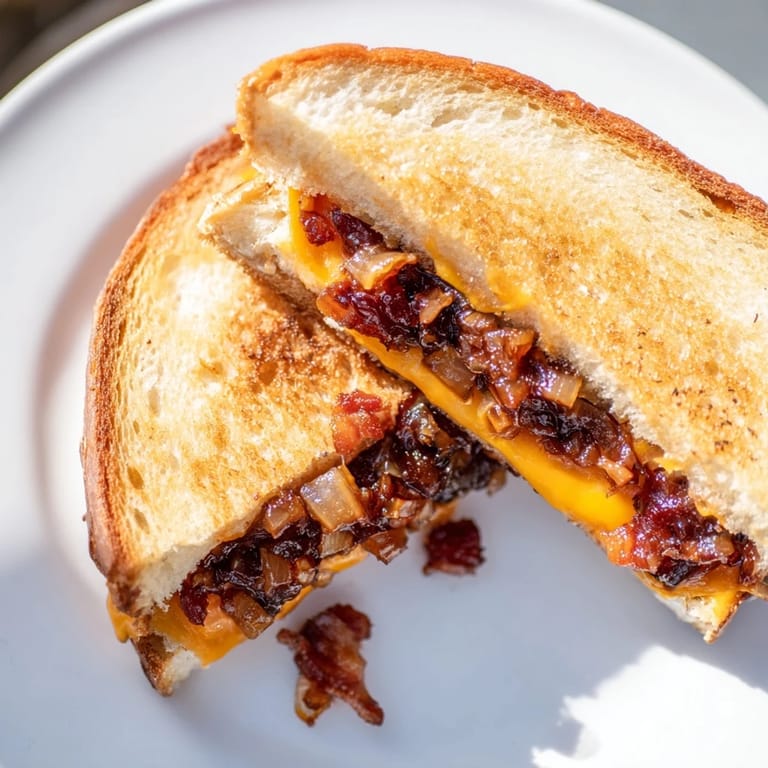
- Be generous here—this is the soul of the sandwich, so use more jam than feels normal. It will melt into the cheese and bread as it cooks, so what looks like a lot now becomes integrated flavor later.
- Layer your cheeses:
- Cheddar first, then Gruyère on top, then press the other slice of bread down gently. The weight of the top bread will press everything together, which is half the reason this works.
- Butter the outside of each sandwich:
- Use softened butter and spread it evenly on both the top and bottom surfaces; it should coat the bread like you're buttering toast, not like you're making a grilled cheese (which is actually the same thing, but the technique matters).
- Cook low and slow in a nonstick skillet:
- Medium-low heat is the secret; if the heat is too high, the bread browns before the cheese melts and you end up with a crunchy outside and cold center. Three to four minutes per side gives the bread time to toast to golden brown while the cheese becomes truly melted, almost flowing into the bread's structure.
- Rest for a moment before cutting:
- One to two minutes off the heat allows the cheese to set just slightly so it doesn't pour out when you slice; it also gives you a moment to stop and anticipate how good this is about to taste.
 Save to Pinterest
 My neighbor smelled this cooking from the other side of a shared wall and came over with genuine suspicion, like she was investigating something she wasn't sure she trusted. By the time she left with the other sandwich I'd made as insurance, she was already planning to make her own, and we spent fifteen minutes talking about the jam like it had changed something about how we thought about food.
Building the Perfect Bacon Jam
The jam is honestly where all the character lives in this sandwich, and it's worth understanding each ingredient's role so you can adjust it next time based on your preferences. The two vinegars together create a tartness that balances the sweetness without making the whole thing sour; if you like things more acidic, use a bit more apple cider vinegar and less maple syrup. If you prefer it sweeter, reverse that ratio. The brown sugar matters more than white sugar because it has molasses already built in, giving you depth without extra ingredients. The smoked paprika is the secret weapon that makes people ask what you did—it adds a smokiness that echoes the bacon without being redundant.
The Cheese Strategy
Sharp cheddar and Gruyère aren't a random pairing; cheddar brings a clean, almost tangy flavor that cuts through the sweetness of the jam, while Gruyère's nuttiness and superior melting ability creates a creamy texture that transforms the whole eating experience. If you can only use one cheese, make it Gruyère, because it melts beautifully and creates that almost luxurious mouthfeel. If you want to experiment, smoked gouda is genuinely excellent here—it echoes the smoky paprika and bacon without adding anything weird. The amount of cheese matters too; this recipe is generous because the bread-to-cheese ratio determines whether you're eating an actual meal or just bread with a cheese suggestion.
The Grilling Technique That Actually Works
The difference between a mediocre grilled cheese and a transcendent one is almost entirely about heat and patience, and this is where most people mess it up by cooking too hot and too fast. Medium-low heat sounds slow, but it's the only way to brown your bread to golden perfection while the cheese inside actually has time to melt into something pooling and luxurious instead of rubbery. If your skillet is nonstick, you don't even need much butter because the pan is already preventing sticking; what you're doing with the butter is building flavor and color. Watch the sandwich as it cooks—you should hear a gentle sizzle, not an aggressive pop and crackle. When you flip it, you'll know it's ready because you can slide a spatula underneath with almost no resistance, and the bread will be golden rather than pale.
- Use a thermometer if you're obsessive about this: aim for the pan to be around 300-325°F for perfect results.
- Butter both sides generously, and if you're feeling fancy, add a tiny pinch of sea salt to the buttered surface just before it hits the pan.
- Don't press down on the sandwich with your spatula—this is actually counterintuitive because you're trying to compact it and force the cheese out.
 Save to Pinterest
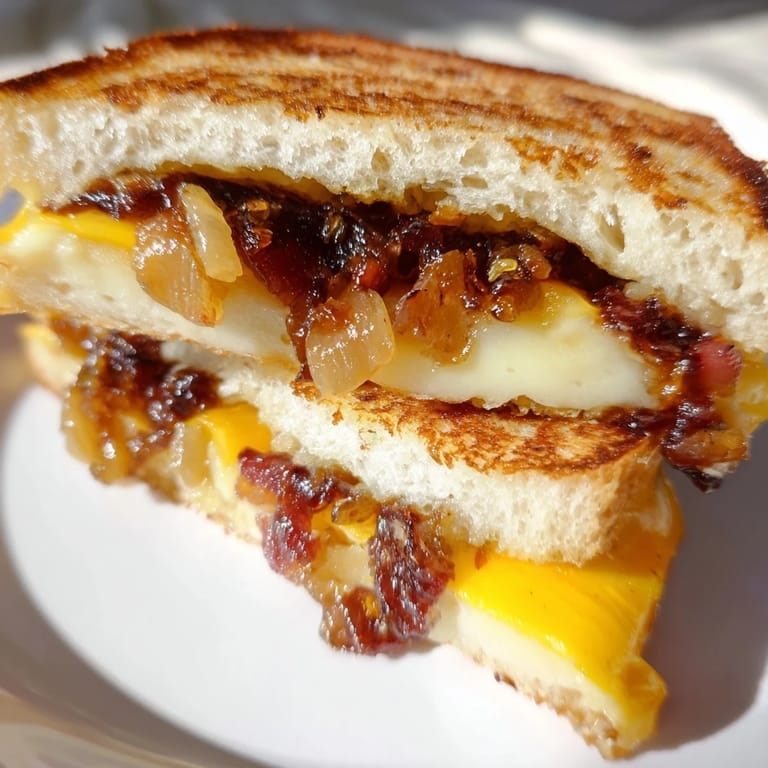
 This sandwich became the thing I make when I want to remind myself that comfort food and elegance aren't mutually exclusive, and that sometimes the most memorable meals are built from simple, honest ingredients treated with actual care. It's the kind of recipe that lives in your kitchen toolbox once you've made it, ready for afternoons when you need something that tastes like home but feels like you're treating yourself.
Common Recipe Questions
- → How do I make the bacon jam?
Cook chopped bacon until crisp, then sauté onions until caramelized. Add garlic, brown sugar, vinegars, maple syrup, smoked paprika, and pepper. Simmer until thick and jammy.
- → What cheeses are used in the sandwich?
Sharp cheddar and Gruyère cheeses provide a balanced sharp and creamy melt.
- → Can I substitute the bread?
Sourdough or country bread are recommended for texture and flavor, but other sturdy breads can work well.
- → How should the sandwich be grilled?
Butter the outsides and cook in a nonstick skillet over medium-low heat until each side is golden and cheese melts, about 3-4 minutes per side.
- → Are there any recommended variations?
Adding tomato slices or arugula before grilling offers extra freshness. You can also substitute Gouda or Fontina for Gruyère.
- → What drinks pair well with this sandwich?
A crisp apple cider or a light lager complements the smoky and rich flavors nicely.